
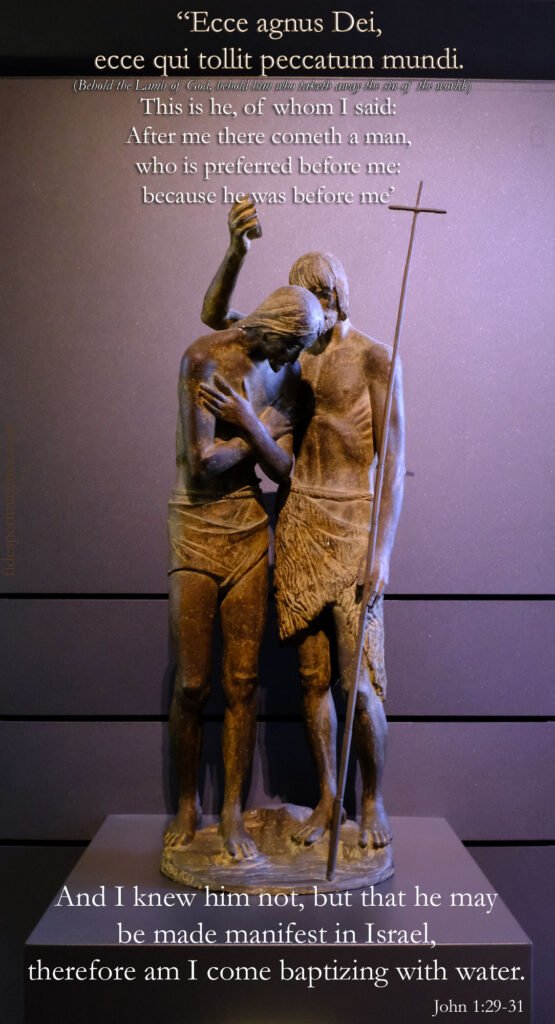
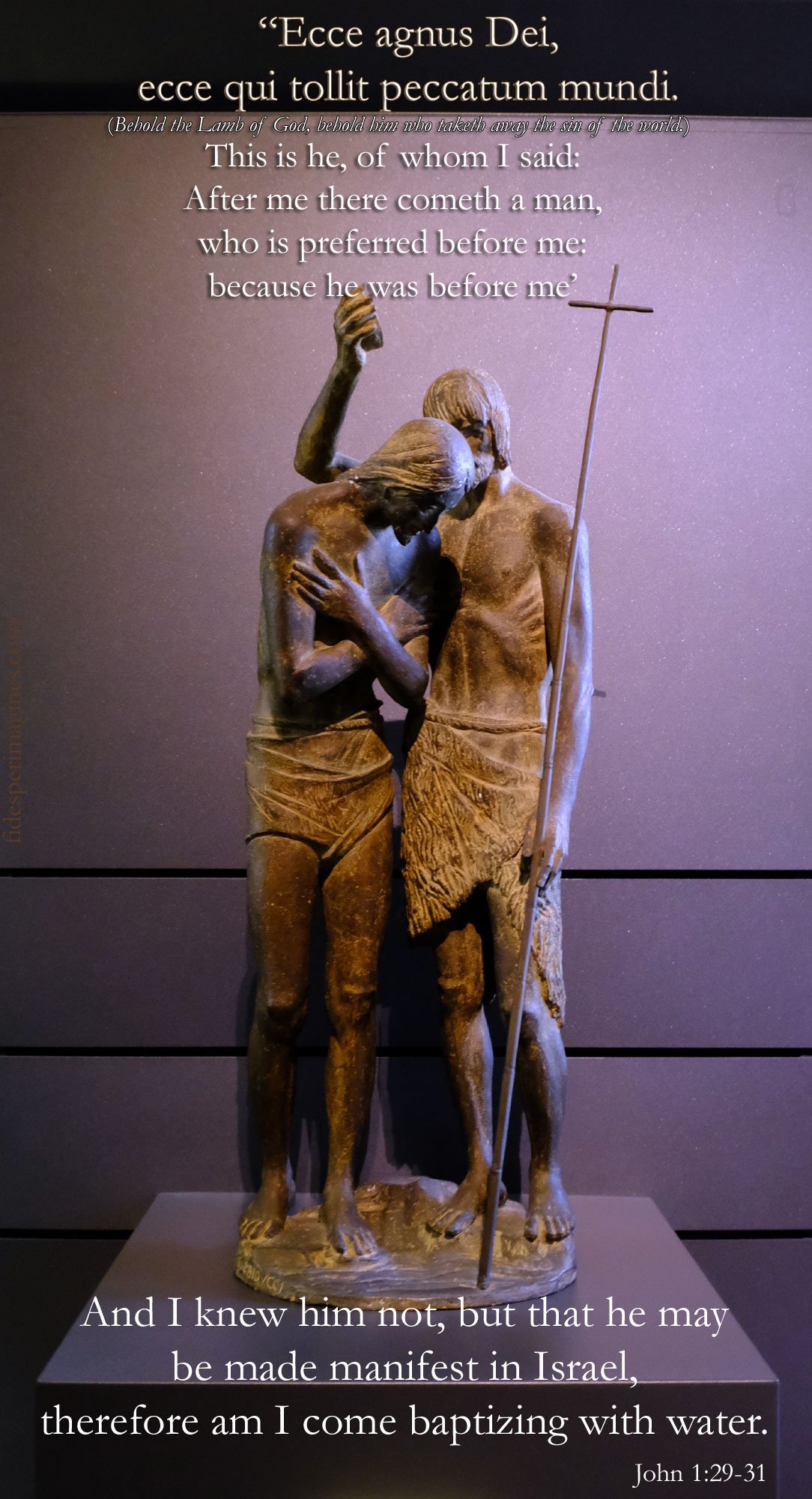
Above: Bronze sculpture by Publio Morbiducci, Battesimo di Gesù at Vatican Museum
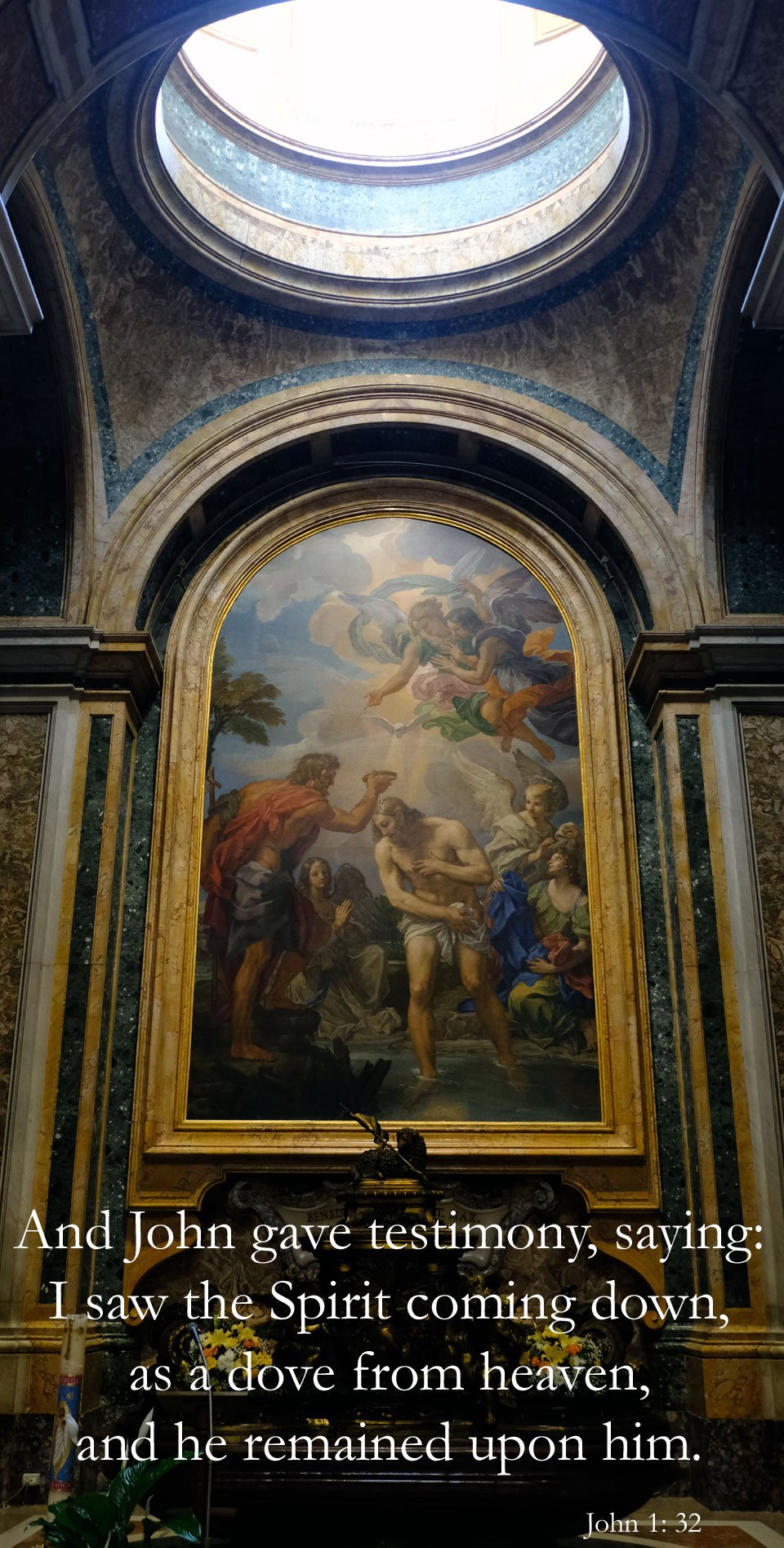
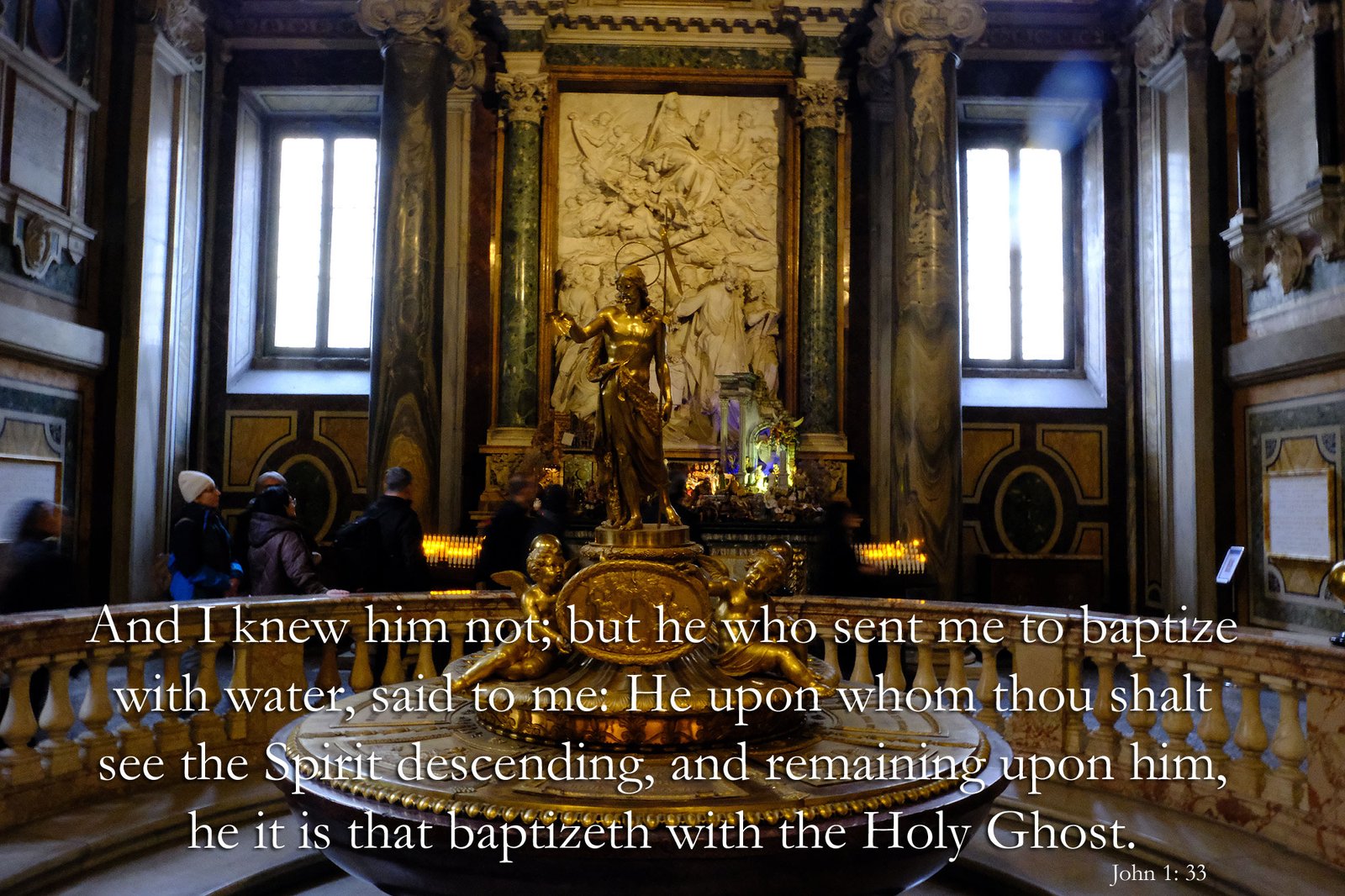
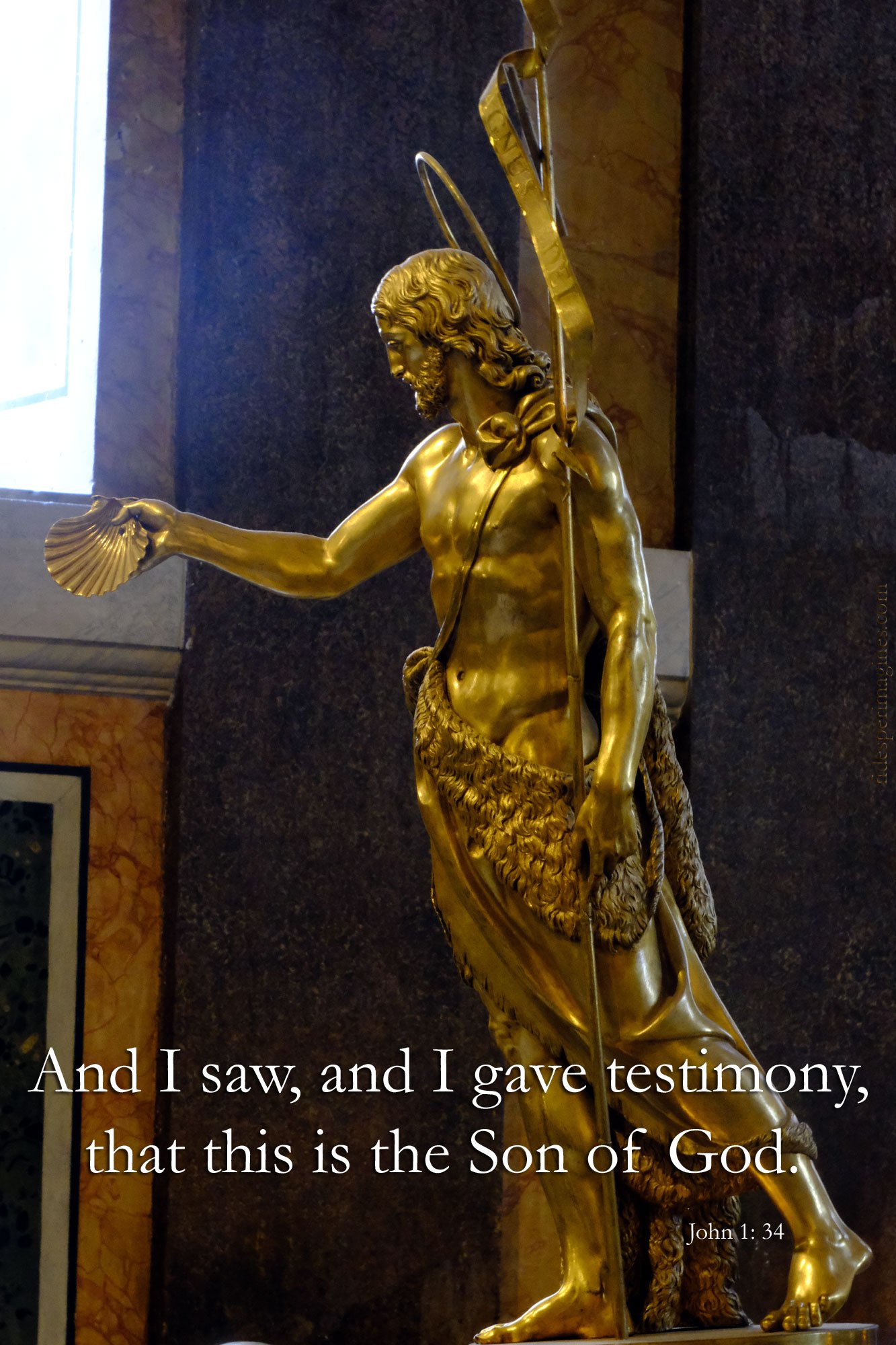
The celebration of the birth of John the Baptist is one of only three nativities in the Church calendar alongside Jesus and his mother, Mary.
John the Baptist’s father prophesied: ‘And you, little child, shall be called Prophet of the Most High, for you will go before the Lord to prepare the way for him’ (Luke 1:76, Canticle of Zechariah, see video below).
In Luke 1:17 (“And he shall go before him in the spirit and power of Elias; that he may turn the hearts of the fathers unto the children, and the incredulous to the wisdom of the just, to prepare unto the Lord a perfect people.”), the Archangel Gabriel prophesies that John the Baptist will precede the Messiah with the “spirit and power of Elijah/Elias”. This can be interpreted as a spiritual (not literal) continuation of Elijah’s prophetic zeal, designed to heal familial divisions and prepare faithful hearts for Jesus Christ.
Gospel:
Now Elizabeth’s full time of being delivered was come, and she brought forth a son.
Elisabeth autem impletum est tempus pariendi, et peperit filium.
And her neighbours and kinsfolks heard that the Lord had shewed his great mercy towards her, and they congratulated with her.
Et audierunt vicini et cognati ejus quia magnificavit Dominus misericordiam suam cum illa, et congratulabantur ei.
And it came to pass, that on the eighth day they came to circumcise the child, and they called him by his father’s name Zachary.
Et factum est in die octavo, venerunt circumcidere puerum, et vocabant eum nomine patris sui Zachariam.
And his mother answering, said: Not so; but he shall be called John.
Et respondens mater ejus, dixit : Nequaquam, sed vocabitur Joannes.
And they said to her: There is none of thy kindred that is called by this name.
Et dixerunt ad illam : Quia nemo est in cognatione tua, qui vocetur hoc nomine.
And they made signs to his father, how he would have him called.
Innuebant autem patri ejus, quem vellet vocari eum.
And demanding a writing table, he wrote, saying: John is his name. And they all wondered.
Et postulans pugillarem scripsit, dicens : Joannes est nomen ejus. Et mirati sunt universi.
And immediately his mouth was opened, and his tongue loosed, and he spoke, blessing God.
Apertum est autem illico os ejus, et lingua ejus, et loquebatur benedicens Deum.
And fear came upon all their neighbours; and all these things were noised abroad over all the hill country of Judea.
Et factus est timor super omnes vicinos eorum : et super omnia montana Judaeae divulgabantur omnia verba haec :
And all they that had heard them laid them up in their heart, saying: What an one, think ye, shall this child be? For the hand of the Lord was with him.
et posuerunt omnes qui audierant in corde suo, dicentes : Quis, putas, puer iste erit? etenim manus Domini erat cum illo.
And Zachary his father was filled with the Holy Ghost; and he prophesied, saying:
Et Zacharias pater ejus repletus est Spiritu Sancto : et prophetavit, dicens :
Blessed be the Lord God of Israel; because he hath visited and wrought the redemption of his people:
Benedictus Dominus Deus Israel, quia visitavit, et fecit redemptionem plebis suae :
La Nativité de saint Jean-Baptiste, célébrée le 24 juin, commémore la naissance du précurseur du Christ. Pour les catholiques, c’est une fête majeure : Jean-Baptiste est l’un des rares saints (avec Jésus et la Vierge Marie) dont l’Église célèbre le jour de la naissance terrestre plutôt que le jour de la mort.
D’après l’Évangile selon Luc, Jean-Baptiste est le fils d’Élisabeth, une femme stérile et âgée, et du prêtre Zacharie. Sa naissance est annoncée par l’ange Gabriel et relève de l’intervention divine. Il est le cousin de Jésus, né six mois avant lui, et a pour mission de préparer les chemins du Messie. Dans l’annonce de l’ange Gabriel à Zacharie, il lui est dit “et lui-même marchera devant lui, dans l’esprit et la puissance d’Elie, pour ramener les cœurs des pères vers les enfants, et les indociles à la sagesse des justes, afin de préparer au Seigneur un peuple parfait.” (Luc 1:17, Bible, Crampon, 1923).
La date du 24 juin n’a pas été choisie au hasard : elle correspond à exactement six mois avant Noël (le 24 décembre). Cette articulation symbolise parfaitement la phrase de Jean-Baptiste concernant Jésus : “Il faut qu’il grandisse et que je diminue”. Après le solstice d’été (21 juin), les jours commencent à raccourcir (la lumière diminue), tandis qu’après le solstice d’hiver, les jours s’allongent à nouveau (la lumière croît).
Dans la tradition catholique, Jean-Baptiste est considéré comme le point d’orgue / le dernier de tous les prophètes. Il incarne la transition entre l’Ancien et le Nouveau Testament. Il est reconnu pour :
Avoir prêché un baptême de repentance et baptisé Jésus dans les eaux du Jourdain.
Avoir tressailli d’allégresse dans le sein de sa mère lors de la Visitation de la Vierge Marie.
Avoir vécu dans le désert une vie de prière et d’ascèse.
En France, cette fête chrétienne s’est superposée aux anciennes célébrations païennes du solstice d’été. C’est pourquoi la Nativité de saint Jean-Baptiste est traditionnellement marquée par les célèbres Feux de la Saint-Jean, qui symbolisent la lumière et le rôle de “flambeau” du prophète.