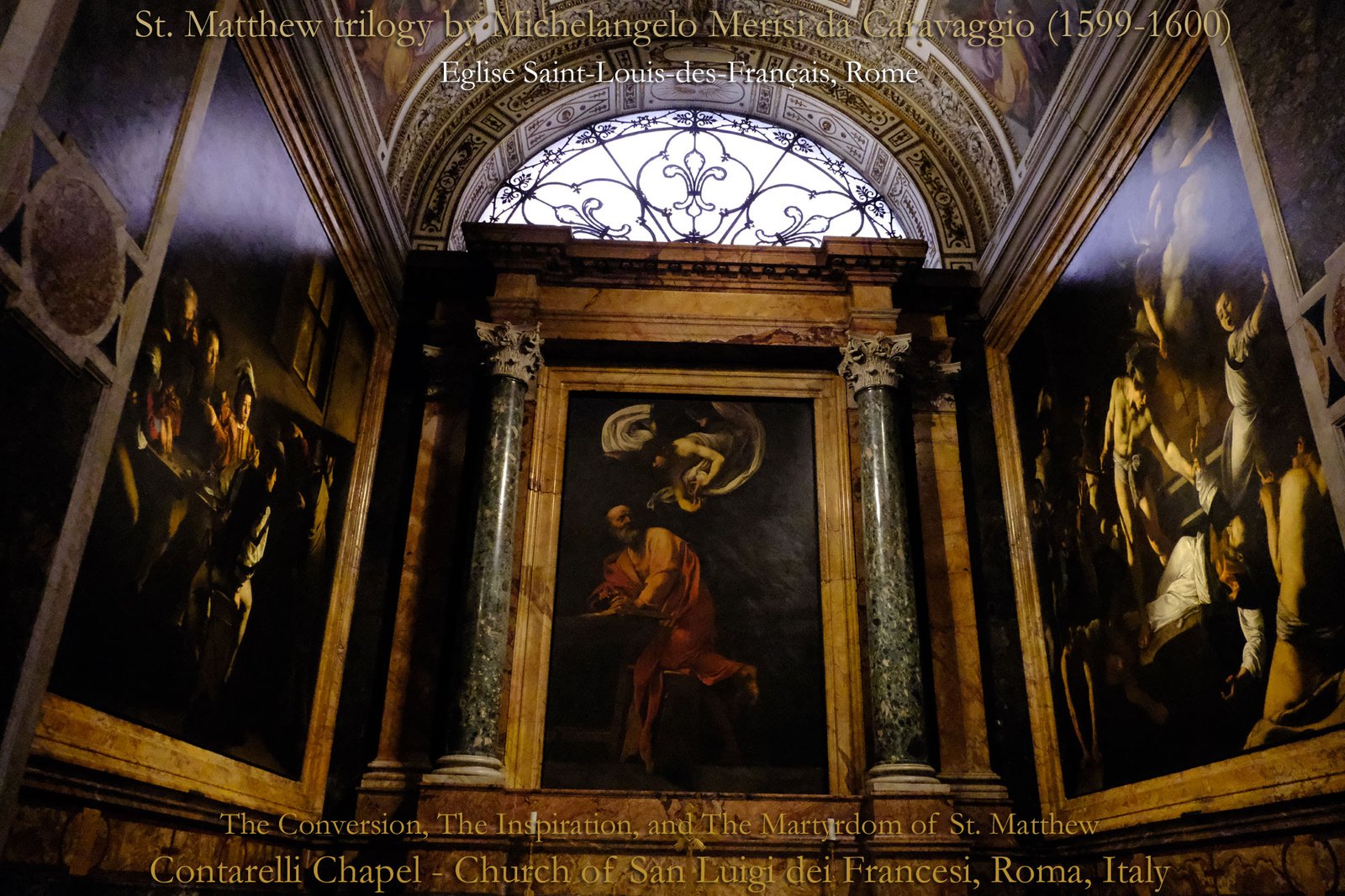
Saint Matthew is celebrated by the Catholic Church as one of the Twelve Apostles of Jesus, the author of the first Gospel, and a powerful symbol of divine mercy and conversion.
Also called Levi (the son of Alphaeus), Matthew was born in Galilee.
Before meeting Jesus, Matthew worked as a publican—a tax collector for the Roman Empire. Jewish society despised tax collectors because they collaborated with the Roman occupiers and often grew rich through extortion and corruption.
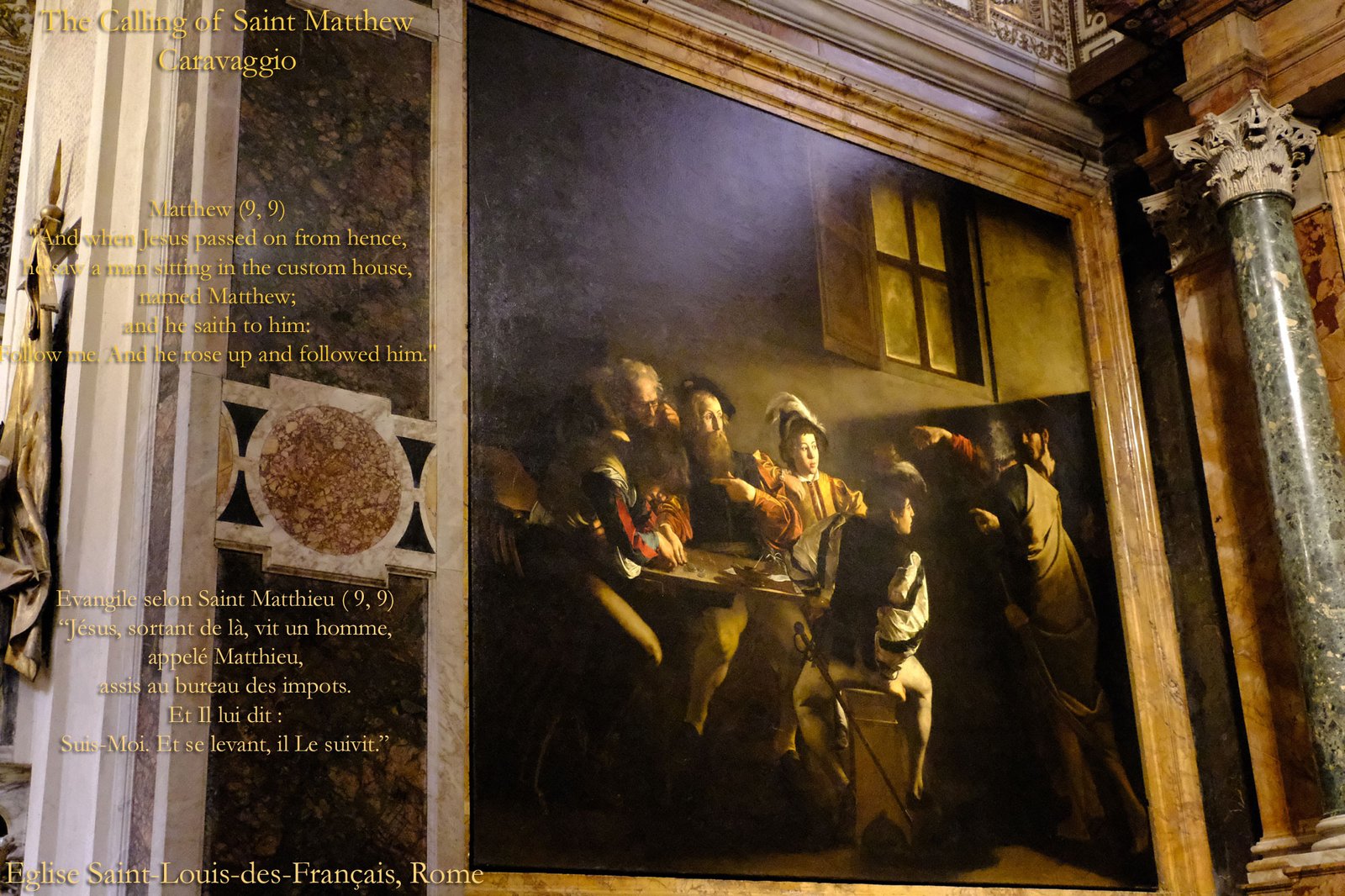
Jesus walked past Matthew’s customs post in Capernaum and said two simple words: “Follow me”. Matthew left his wealth, career, and old life behind immediately.
Matthew hosted a large banquet at his house for Jesus, drawing fierce criticism from the Pharisees for dining with publicans and sinners. Jesus famously replied, “Those who are well do not need a physician, but the sick… I did not come to call the righteous, but sinners”.
“And when Jesus passed on from thence, he saw a man sitting in the custom house, named Matthew; and he saith to him: Follow me. And he arose up and followed him.
And it came to pass as he was sitting at meat in the house, behold many publicans and sinners came, and sat down with Jesus and his disciples.
And the Pharisees seeing it, said to his disciples: Why doth your master eat with publicans and sinners?
But Jesus hearing it, said: They that are in health need not a physician, but they that are ill.
Go then and learn what this meaneth, I will have mercy and not sacrifice. For I am not come to call the just, but sinners.” (Matthew, 9. 9-13)
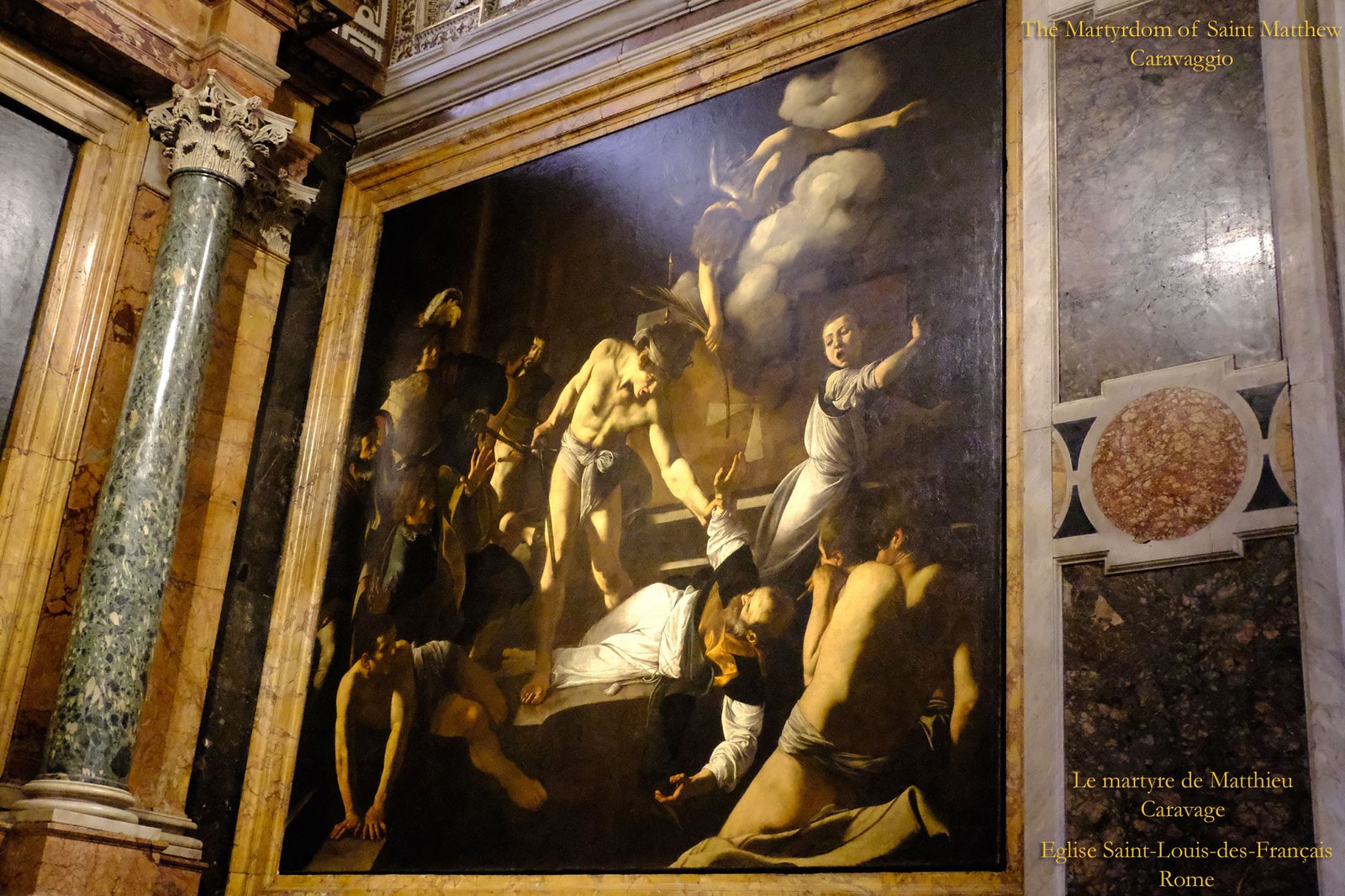
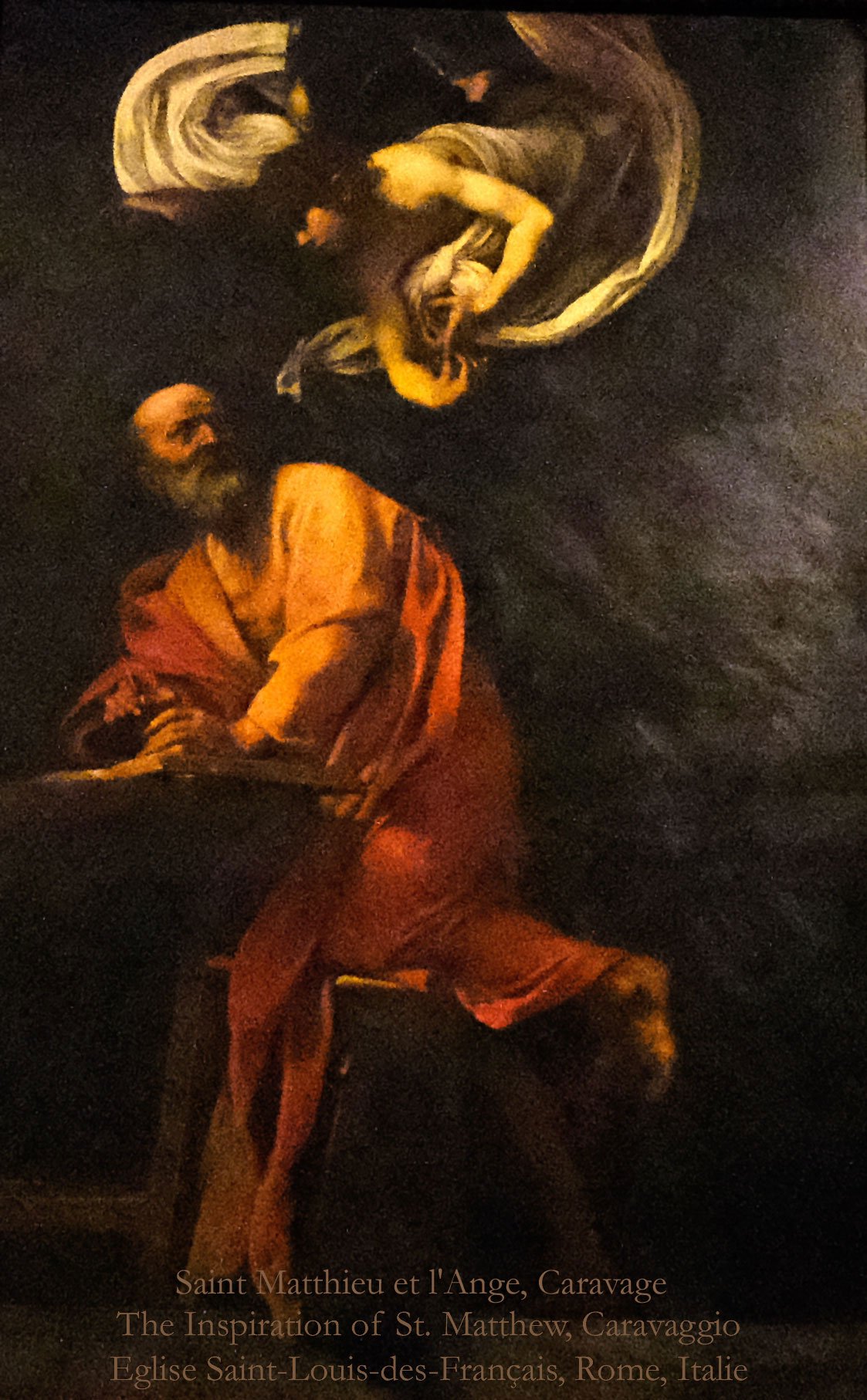
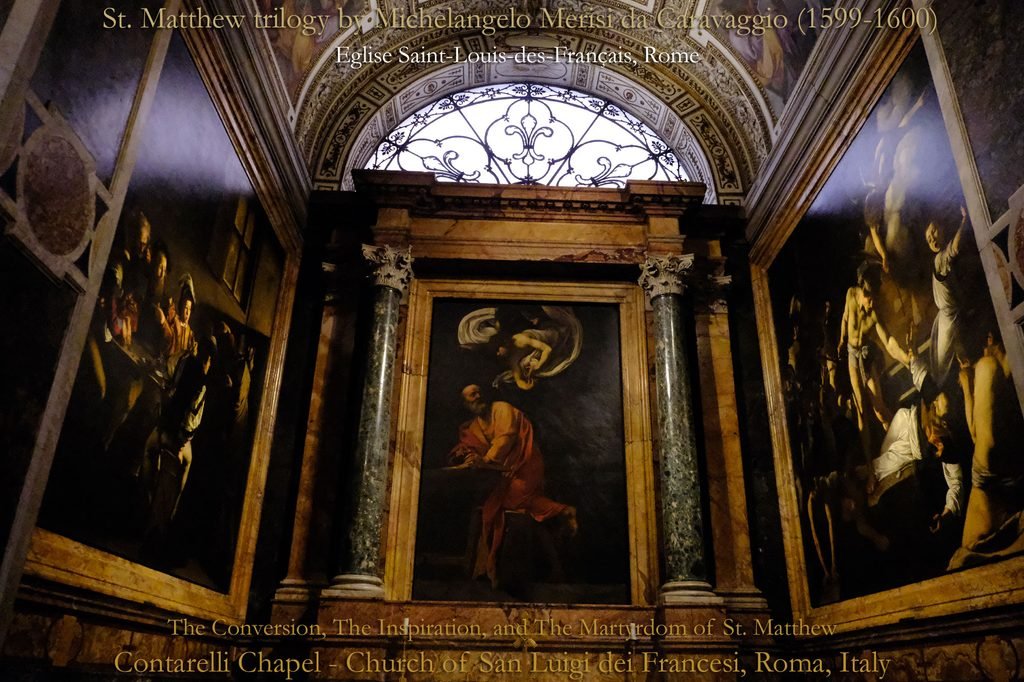
Photos : inside the Contarelli Chapel in the Church of San Luigi dei Francesi. Explanations here (St. Matthew according to Caravaggio: a spiritual masterpiece).
prises dans l’église Saint-Louis-des-Français, où se trouvent trois tableaux de Michelangelo Merisi, dit le Caravage. Cliquez sur le lien ci-dessus pour en savoir plus et voir des vidéos à ce sujet.
La fête de saint Matthieu, apôtre et évangéliste, est célébrée chaque année le 21 septembre par l’Église catholique.
Matthieu s’appelait au départ Lévi, fils d’Alphée. Il était publicain, c’est-à-dire collecteur d’impôts pour le compte de l’occupant romain à Capharnaüm. Ce métier était très mal vu et méprisé par le peuple juif et les pharisiens.
Alors qu’il est assis à son bureau de douane, Jésus lui dit simplement : « Suis-moi ». Matthieu quitte immédiatement ses registres et ses richesses pour marcher à sa suite.
L’appel de Matthieu montre que Jésus ne vient pas appeler les justes, mais les pécheurs. Sa conversion est un message d’espérance et de miséricorde divine pour tous.
Devenu l’un des Douze apôtres, il a rédigé le premier des quatre Évangiles. Son texte est le plus ancré dans la tradition juive (avec de nombreuses citations de l’Ancien Testament) pour montrer que Jésus accomplit les Écritures.
La tradition chrétienne rapporte qu’il est mort en martyr (en Éthiopie ou en Syrie selon les récits). Il est le saint patron des comptables, des banquiers, des fiscalistes et des agents des douanes.