
According to Catholic tradition, Cecilia was a noble Roman woman who consecrated her virginity to God. Arranged in marriage to a pagan nobleman named Valerian, she told him an angel guarded her purity and urged him to seek baptism.
Valerian was baptized by Pope Urban I, and his brother Tiburtius—along with a Roman officer named Maximus—later converted and were martyred for their faith and charity toward persecuted Christians.
Ordered to sacrifice to Roman gods by the prefect Almachius, Cecilia refused. Tradition states she survived an attempt to suffocate her in a heated bath, then lived for three days after a failed decapitation attempt, using her final days to pray, give to the poor, and ask that her home become a church.
While her detailed passio (martyrdom account) is legendary and many specific biographical details are uncertain, veneration of Cecilia in Rome is ancient. The Titulus Ceciliae church in Rome’s Trastevere district dates back to early Christian times, and her feast was observed by the sixth century.
Tradition holds she was first buried in the Catacombs of Callixtus before Pope Paschal I moved her relics in the 9th century to the Basilica of Santa Cecilia in Trastevere, where a famous sculpture depicts her martyrdom. Her feast on November 22 and musical patronage remain central to how Catholics remember her.
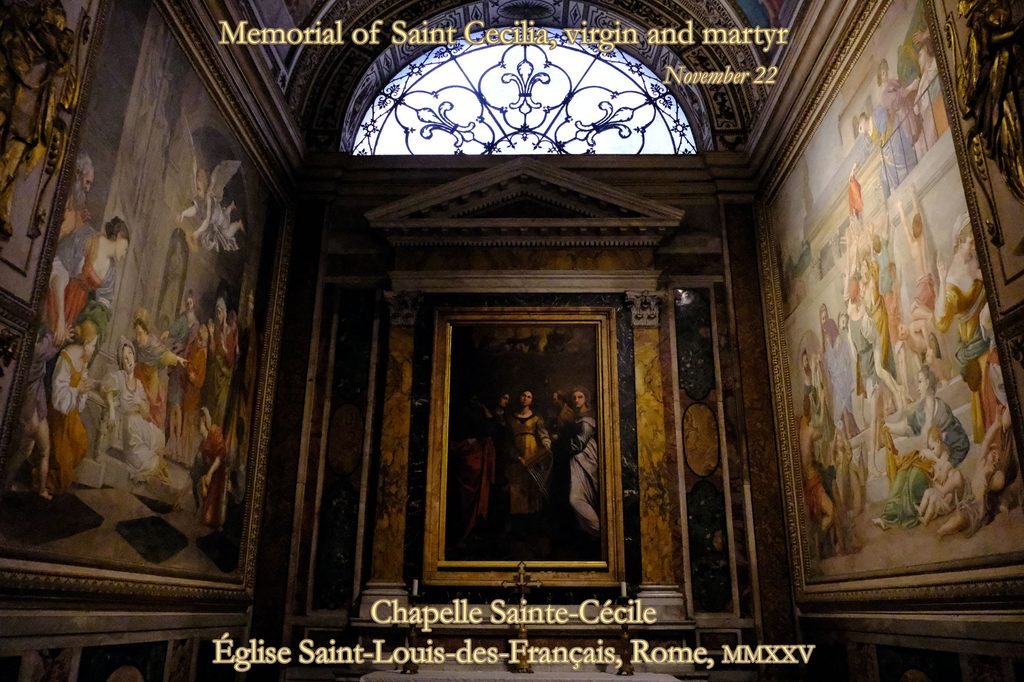
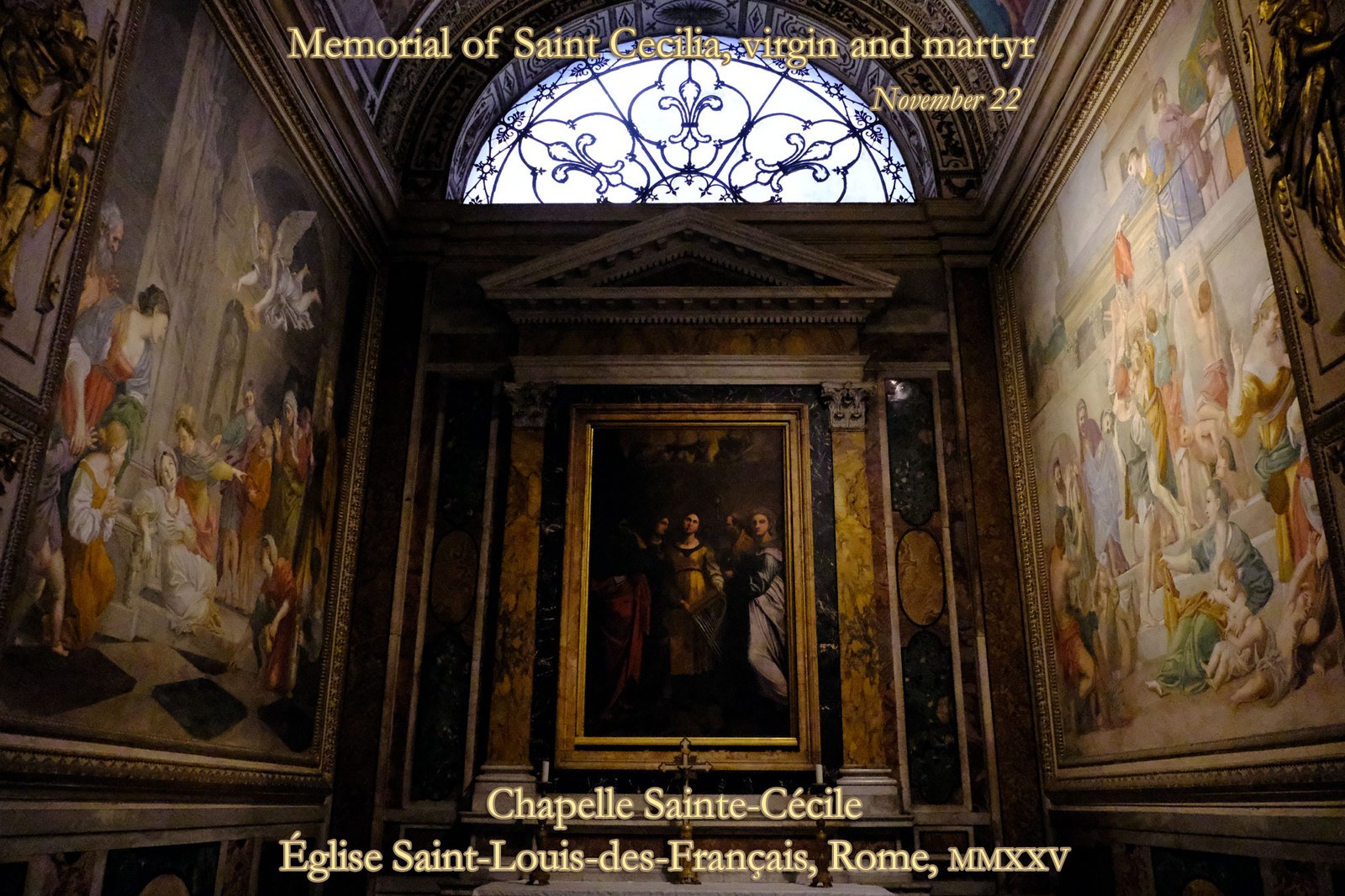
Photo above: The Chapel of Saint Cecilia (Chapelle Sainte-Cécile) is the second chapel on the right nave of the Church of Saint Louis of the French (Église Saint-Louis-des-Français) in Rome, famous for its frescoes depicting scenes from the life of Saint Cecilia by Domenichino (1616–1617).
La chapelle Sainte-Cécile est la deuxième chapelle de la nef droite de l’église Saint-Louis-des-Français à Rome, célèbre pour ses fresques représentant des scènes de la vie de sainte Cécile peintes par le Dominiquin (1616-1617).
Sainte Cécile (fêtée le 22 novembre) est une vierge et martyre romaine du IIIe siècle, vénérée dans l’Église catholique et connue comme la patronne des musiciens.
Issue de la grande famille romaine des Cecilii, elle fait vœu de virginité et aide les chrétiens de Rome. Mariée à un païen nommé Valérien, elle l’amène à la foi chrétienne, tout comme son beau-frère Tiburce.
Refusant de sacrifier aux idoles romaines devant le préfet Almachius, elle survit à l’épreuve de la vapeur chaude puis subit trois coups d’épée ou de hache sans mourir sur le coup, agonisant trois jours durant lesquels elle confie sa maison à l’Église.
Inhumée aux catacombes de Saint-Calixte, elle est transférée au IXe siècle à la basilique Sainte-Cécile-du-Trastevere à Rome. Son nom figure dans le canon de la messe dès le Ve siècle.
La tradition rapporte que, durant son martyre ou ses noces, elle chantait dans son cœur la louange de Dieu ou entendait les chœurs célestes. Elle est ainsi invoquée par les musiciens, chanteurs, chorales et facteurs d’instruments.
Certains récits de la tradition française mettent aussi en avant son rôle de catéchiste auprès des nouveaux convertis et son invocation traditionnelle pour la voix ou les maux de gorge, comme le rappelle France Catholique.