
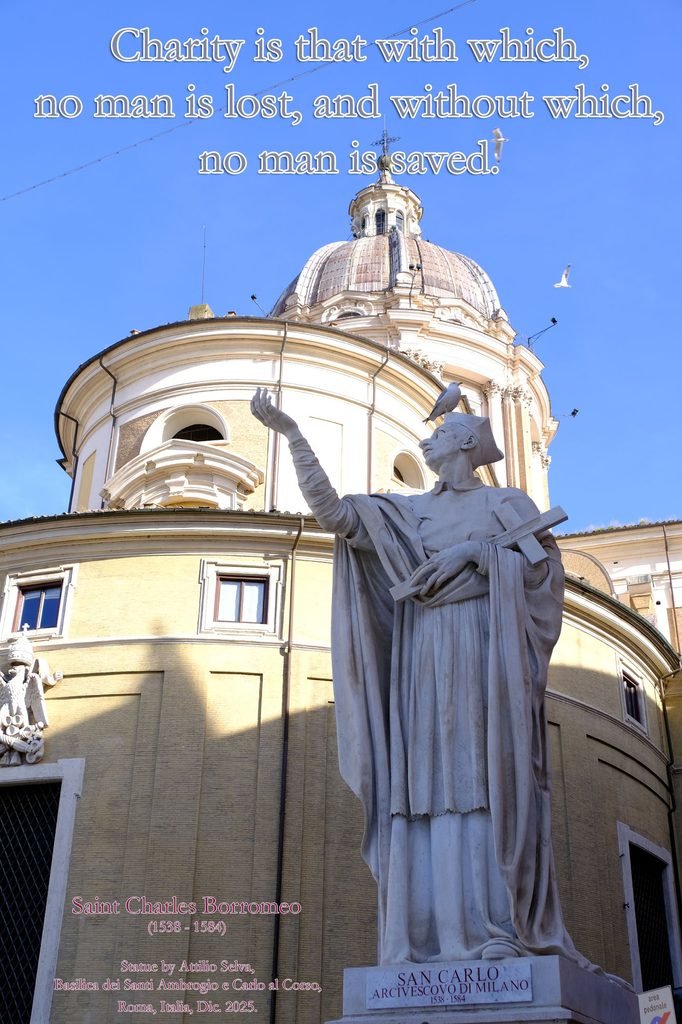
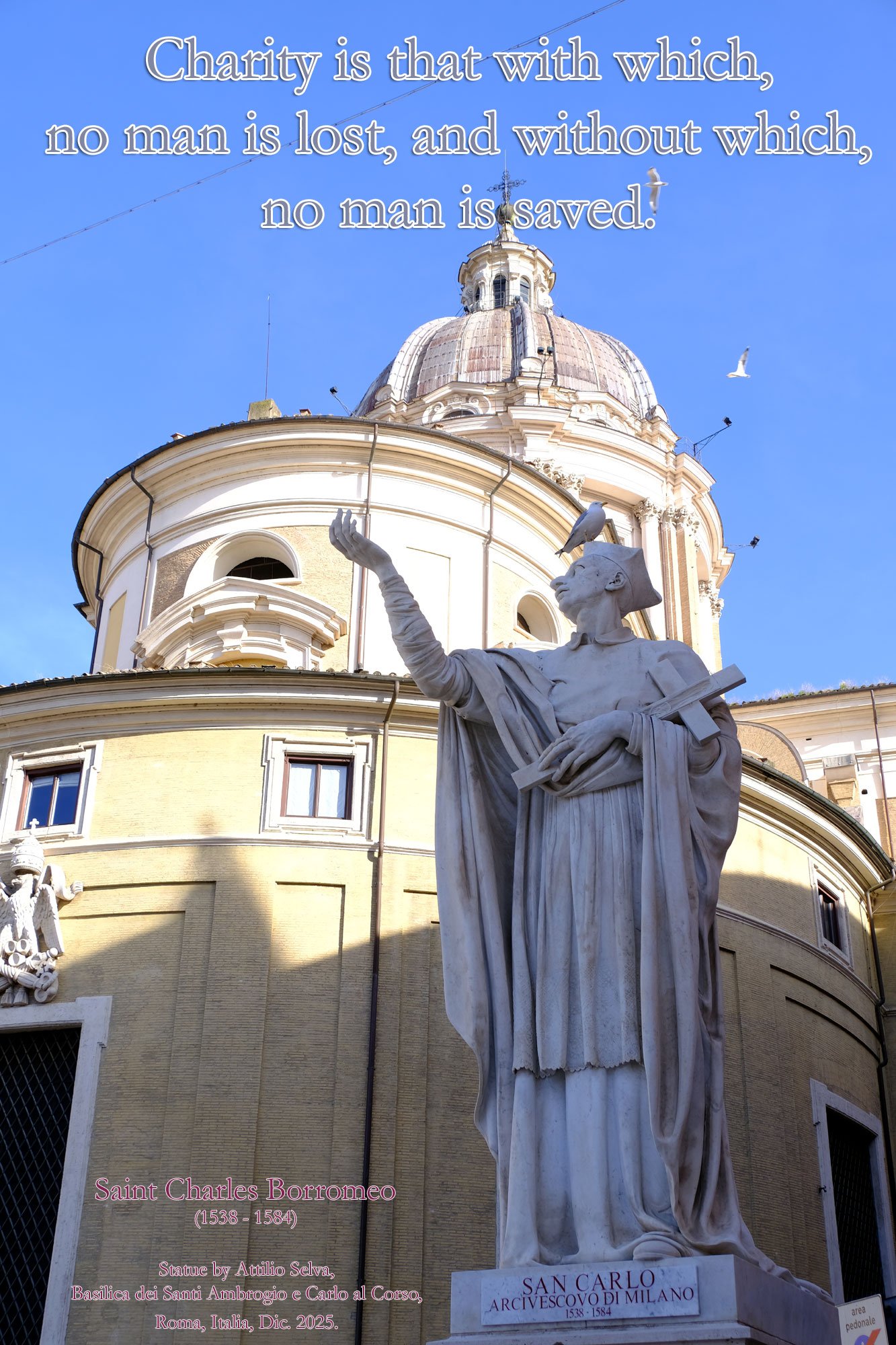
Born into Italian nobility in 1538, Charles Borromeo was appointed a cardinal at just 22 years old by his uncle, Pope Pius IV. Despite his young age and immense wealth, he chose a life of strict personal asceticism, poverty, and deep pastoral care. He was canonized on November 1, 1610, by Pope Paul V.
Feast Day: November 4.
Patronage: Bishops, cardinals, seminarians, catechists, and spiritual leaders.
As a cardinal and nephew of Pope Pius IV, Charles played a vital role in reconvening and finishing the Council of Trent (1562–1563), which charted the Catholic Church’s response to the Protestant Reformation. He helped draft the Roman Catechism and reform Church liturgy and music.
When he took charge of the Archdiocese of Milan, the local clergy and religious orders had grown lax and corrupt. He held provincial councils, removed abusive practices like simony (buying and selling church offices), enforced priestly discipline, and lived a simple, austere life himself instead of enjoying aristocratic luxury.
To fix the problem of uneducated or careless priests, he established seminaries and schools—including founding the Confraternity of Christian Doctrine (CCD), which pioneered systematic Sunday school education for children.
During the devastating Milan plague and famine of 1576–1578, Charles stayed behind while political and religious elites fled. He spent his personal wealth to feed tens of thousands of people daily and personally ministered to the sick and dying.
His strict reforms met fierce resistance; a member of a suppressed religious order even attempted to assassinate him by shooting him with a gun while he prayed in his private chapel (Charles survived the wound). He died exhausted at the age of 46.
Saint Charles Borromée (1538–1584) est une figure majeure de la Réforme catholique et un modèle d’évêque du XVIe siècle, fêté le 4 novembre.
Né près de Milan dans une puissante famille noble (apparentée aux Médicis), il est destiné très tôt à l’Église. Nommé cardinal et secrétaire d’État par son oncle le pape Pie IV à seulement 22 ans, il cumule d’abord des charges lucratives.
Après la mort de son frère aîné, il opère un tournant spirituel profond, est ordonné prêtre puis nommé archevêque de Milan. Il devient l’un des principaux artisans de l’application des décrets du Concile de Trente.
Il réforme son clergé, crée les premiers séminaires pour former les prêtres, lutte contre la corruption et rédige un catéchisme de référence.
Lors de la terrible peste de Milan en 1576–1578, il reste dans la ville déserte pour nourrir les affamés, vendre son argenterie et soigner personnellement les malades au péril de sa vie.
Il meurt le 3 novembre 1584 à 46 ans et est canonisé en 1610 par le pape Paul V.
Pour l’Église catholique, Saint Charles incarne l’évêque idéal post-tridentin : résident dans son diocèse, proche de ses fidèles, austère et entièrement dévoué à la charité et à la liturgie.
En France comme ailleurs, son exemple a fortement inspiré la réforme du clergé aux XVIIe et XVIIIe siècles (notamment à travers l’école française de spiritualité et des figures comme Saint François de Sales).
Photo above/ci-dessus: Basilica San Carlo Al Corso, Rome, Italy, 18 December 2025.