The Three-in-One IdentityFor centuries, the Western Church identified Mary Magdalene as the same person as the “sinful woman” in Luke 7 and Mary of Bethany (sister to Martha and Lazarus). While modern biblical exegesis distinguishes them, the traditional understanding—championed by Pope St. Gregory the Great—presents her as the ultimate symbol of a soul redeemed from a worldly lifestyle to one of deep, mystical contemplation.
“Apostle to the Apostles” St. Thomas Aquinas gave her the title Apostola Apostolorum (Apostle to the Apostles) because the Risen Lord commissioned her to announce the Resurrection to the male disciples. Because of this immense honor, the Gloria is recited on her feast day, and the Credo (Nicene Creed) is chanted during the Traditional Latin Mass (TLM) just as it is on the feasts of the original Twelve Apostles.
Life of Penance in Provence
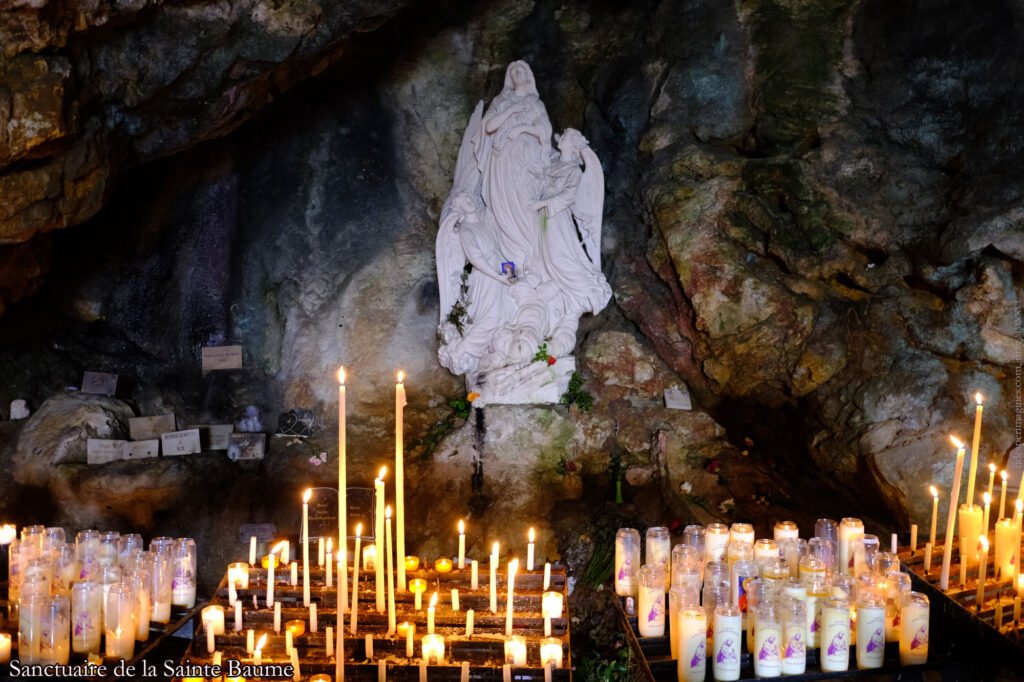
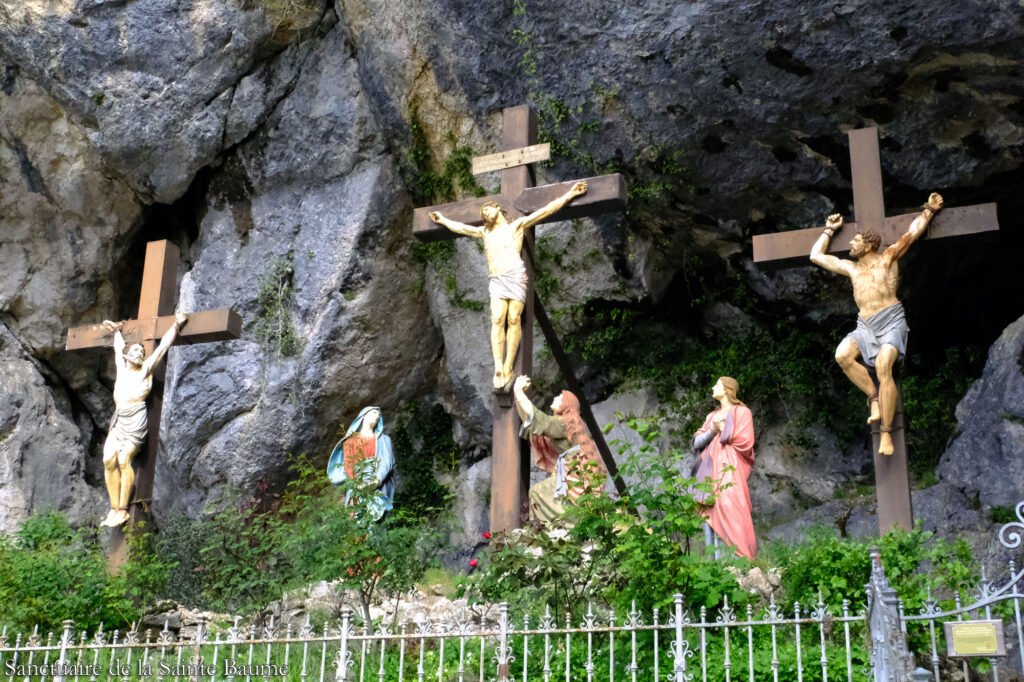
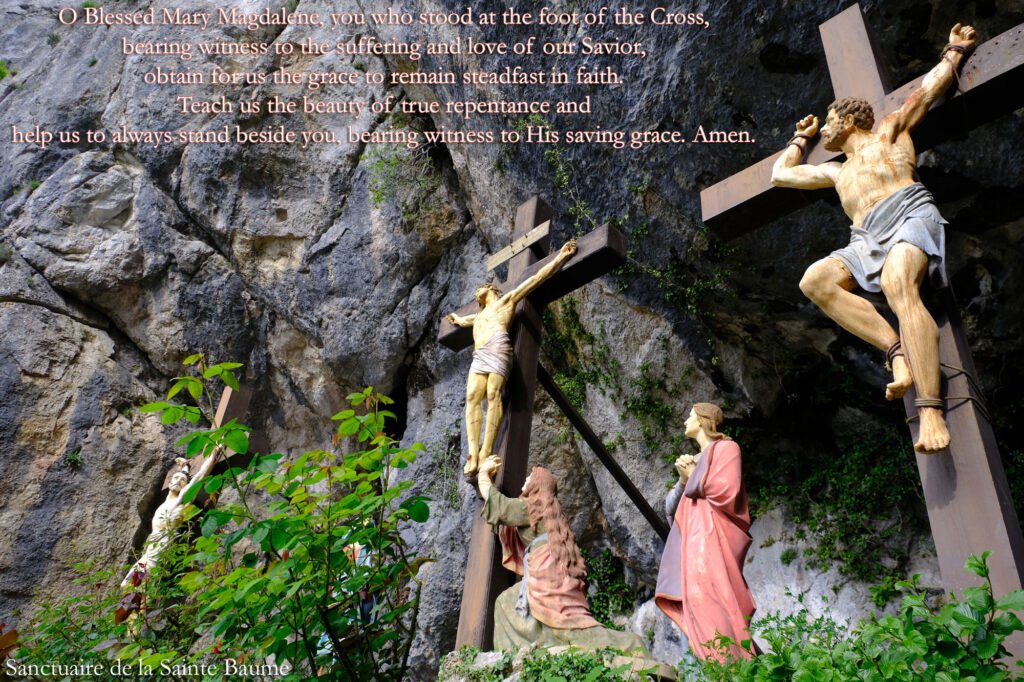
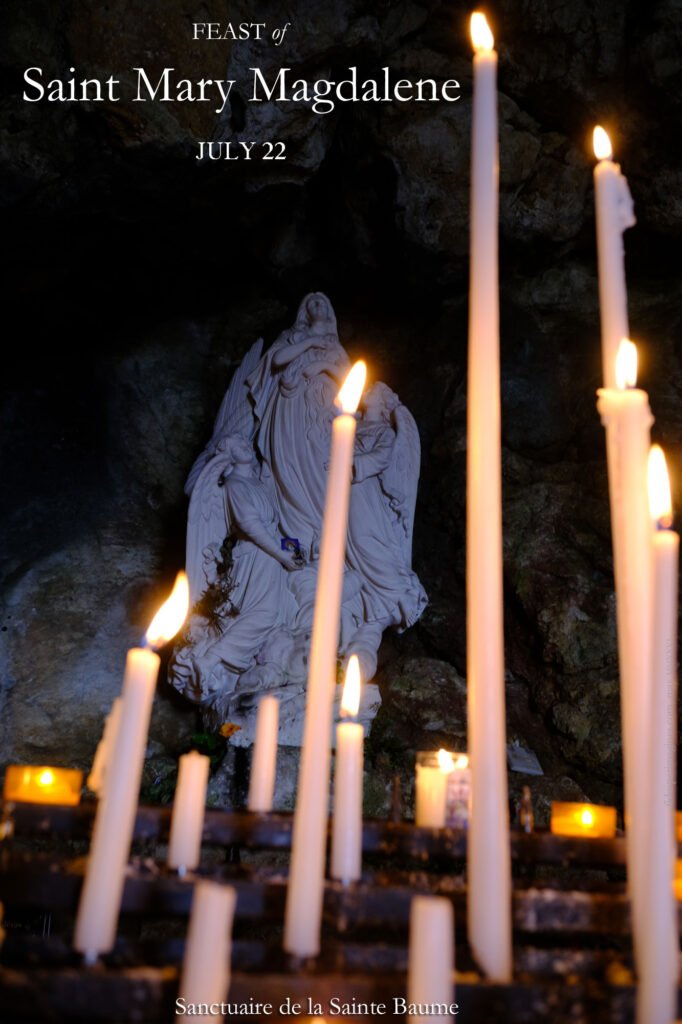
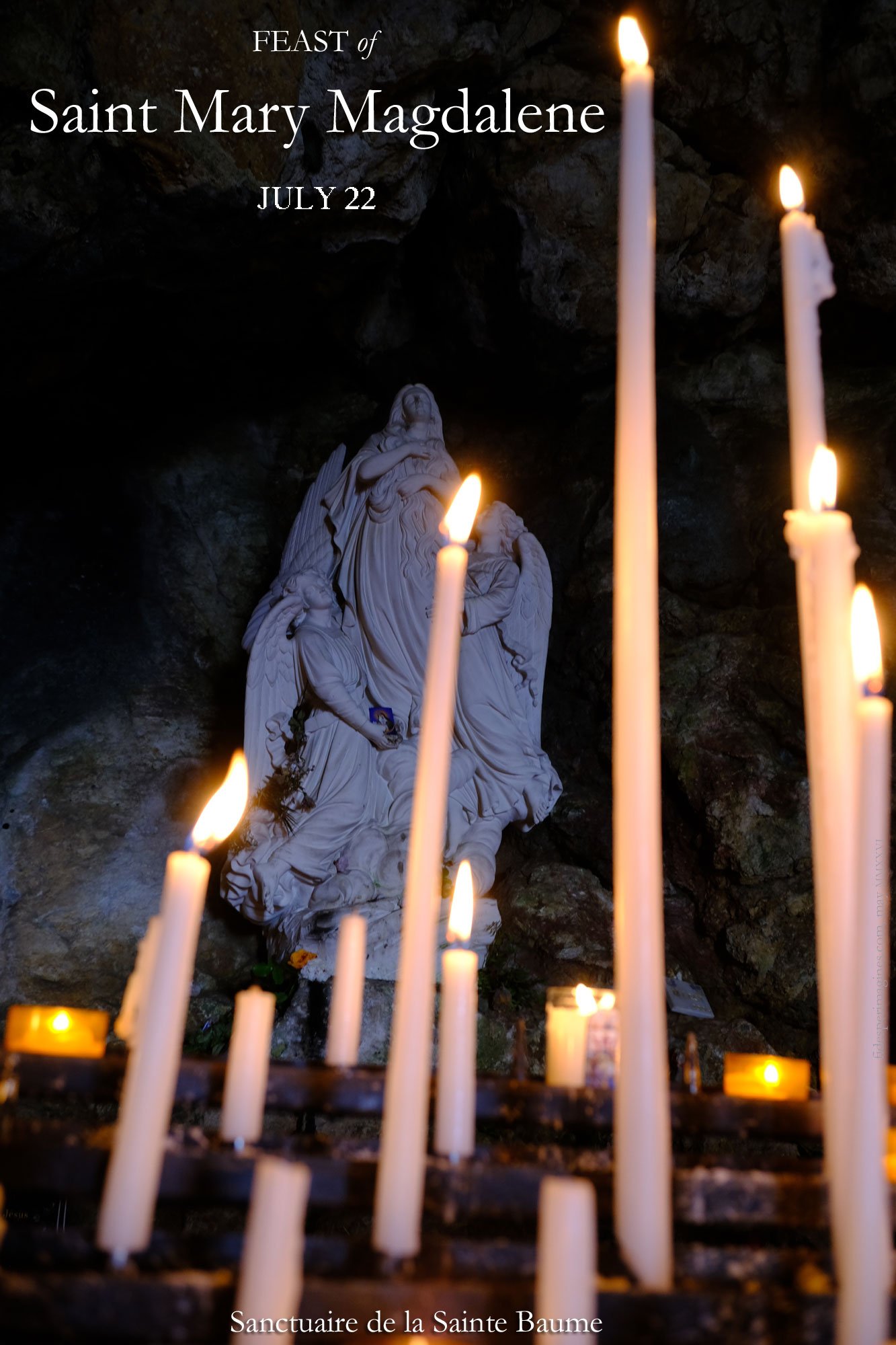
According to ancient French pious tradition, after the Ascension, Mary Magdalene, Martha, and Lazarus were set adrift by persecutors and landed on the shores of Provence. She spent the final 30 years of her life living as a hermit in a mountain cave at La Sainte-Baume, spending her days in prayer and levitated by angels for the sacraments before her death. Her purported relics are still kept in the Basilica of St. Mary Magdalene in Saint-Maximin-la-Sainte-Baume.
Patronage and Symbolism
She is the patroness of penitents, contemplatives, perfumers, and hairdressers. In traditional sacred art, she is almost always depicted with:
– an alabaster jar (referencing the anointing of Jesus),
– long, flowing hair (used to dry Christ’s feet)
– a skull and prayer beads (representing her life of penance and memento mori).
Here is a link to th The Roman missal (Latin / English) for following the liturgies from divinum officium.
Dans la tradition catholique, Sainte Marie-Madeleine (Marie de Magdala) est une disciple très proche de Jésus. Elle l’a suivi jusqu’au pied de la croix et a été la première à le voir ressuscité. Surnommée l’« apôtre des apôtres », elle s’est vu confier la mission d’annoncer la Résurrection.
L’histoire de Sainte Marie-Madeleine dans la foi et la tradition catholique comporte plusieurs aspects essentiels :
Dans les Évangiles : Elle est délivrée de sept démons par Jésus et devient un témoin oculaire de sa mort et de son tombeau vide. Elle fait partie de ces femmes qui soutenaient matériellement la communauté.
Évolution de son image : Longtemps assimilée à d’autres femmes de la Bible (notamment la pécheresse anonyme qui oint les pieds de Jésus) par le pape Grégoire le Grand au VIe siècle, elle est devenue le symbole universel du repentir. Cependant, l’Église catholique moderne insiste aujourd’hui sur son rôle majeur de disciple et d’évangélisatrice. En 2016, le pape François a élevé sa mémoire au rang de fête liturgique (célébrée le 22 juillet), soulignant son importance.
L’ancrage en France : Selon une très ancienne tradition provençale, elle aurait débarqué en Camargue (aux Saintes-Maries-de-la-Mer) avec son frère Lazare et sa sœur Marthe. Elle se serait ensuite retirée pour vivre en ermite pendant 30 ans dans une grotte du massif de la Sainte-Baume. Cette grotte est devenue l’un des lieux de pèlerinage les plus anciens et importants de France, aujourd’hui gardé par les frères Dominicains. Un autre haut lieu de dévotion se trouve à la basilique Sainte-Marie-Madeleine de Vézelay en Bourgogne.